
Neonatal MRI in Birth Injury Evaluation: What Imaging Can and Cannot Establish
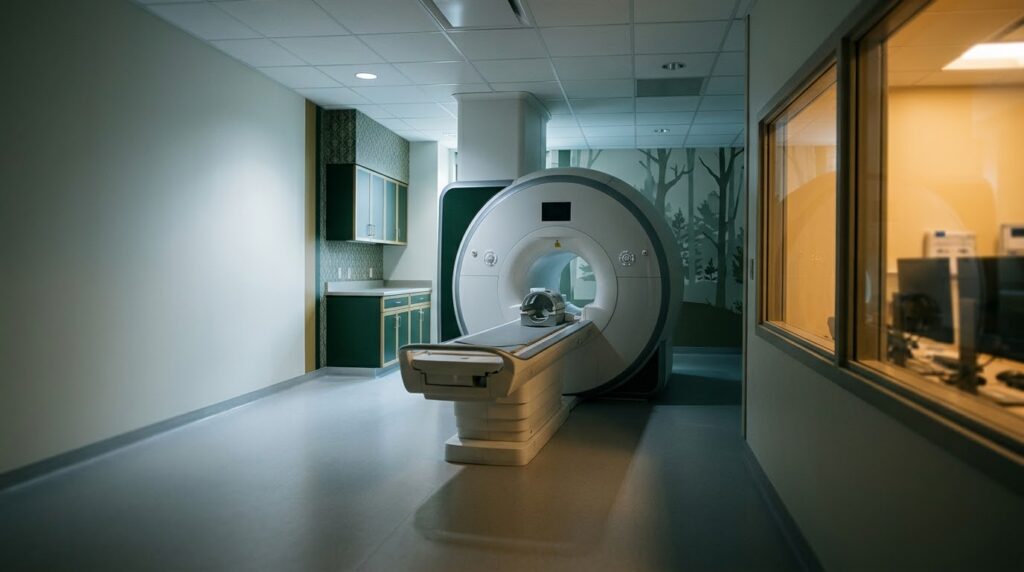
Neonatal brain MRI is ordered to answer a clinical question. It may identify injury, characterize an abnormality, or clarify findings that examination or another study has not resolved. In a later evaluation of possible birth injury, the same images often become central evidence of the nature, extent, and timing of neurological injury.
Their evidentiary value depends on discipline. An MRI can contribute to diagnosis, prognosis, and causation. It does not answer all three questions by itself, and treating it as though it does exposes an analysis to attack from either side.
The clinical question frames the study
ACOG’s task force report on neonatal encephalopathy and neurologic outcome treats neuroimaging as one component of a broader assessment of whether, and when, an acute peripartum event contributed to neonatal encephalopathy. Encephalopathy describes disturbed neurological function. It does not identify why that disturbance occurred.
The order and the clinical history therefore matter as much as the fact that a scan was performed. Was the concern hypoxic-ischemic injury, hemorrhage, stroke, infection, or a developmental or metabolic process? Each is a different question, and the report should be read in relation to the question actually asked.
Description, interpretation, and causation are separate levels
The ACR/RSNA pediatric MRI resource describes uses including assessment of bleeding, swelling, vascular abnormality, injury, stroke, and infection. Those are possible imaging questions, not findings expected in every newborn.
| Level | What it addresses | What it does not establish |
|---|---|---|
| Description | What the radiologist observes | The significance of the observation |
| Interpretation | What the appearance most likely represents | The mechanism or the conduct that preceded it |
| Causation | Whether the findings fit a proposed mechanism and timeframe | Anything, without the rest of the record |
A disciplined review preserves all three levels. A specific-sounding term in a report should not be converted into an account of an obstetric event. An equivocal phrase should not be read as assurance that no meaningful injury occurred.
Imaging and timing
Imaging findings evolve in recognized ways after injury, and that evolution is one of the bases on which qualified neuroradiologists offer timing opinions. Diffusion-weighted sequences are particularly significant in this respect; the firm has addressed their role in acute brain injury analysis separately.
A timing opinion is strongest when the imaging pattern, the interval between birth and acquisition, the clinical course, laboratory findings, and the obstetric record converge on the same window. It is weakest when it rests on the image alone or when the window is stated more narrowly than the evidence permits. Timing is among the most contested issues in birth injury trials, and defense experts routinely test whether a proposed window is supported by the full record.
This matters most where recognition or treatment was allegedly delayed. Demonstrating injury on an image is different from establishing that an earlier response was indicated while an opportunity to prevent or reduce that injury remained.
Prematurity changes the imaging question
The imaging pathway for a premature infant differs from that for a term infant. The American Academy of Pediatrics’ clinical report, Routine Neuroimaging of the Preterm Brain (Pediatrics, 2020), reviews the available modalities, evidence-based indications, timing of examinations, and prognostic value, and notes substantial variability among units in which studies are obtained and when.
An ultrasound followed by MRI therefore does not by itself indicate that the earlier study failed. The relevant question is whether the investigation matched the infant’s gestational age, clinical condition, and evolving findings under the standard applicable at the time.
Prognosis requires more than a report
Prognosis concerns future function. Imaging concerns visible findings at a particular stage. The two are related and should not be collapsed.
A prediction should be examined for its foundation: does it rest on the images alone, or also on examination, the neonatal course, and subsequent developmental assessment? Uncertainty should be stated rather than replaced with either reassurance or a worst-case forecast. The same restraint applies to a normal or inconclusive study, whose significance depends on what it was designed to detect and whether it fits the child’s clinical condition.
Imaging within a causation analysis
Where a child has permanent neurological impairment, MRI is one component of an inquiry into mechanism and preventability. That inquiry should work from the original image data as well as the report, together with the prenatal, intrapartum, resuscitation, neonatal, and follow-up records relevant to the proposed explanation. Imaging studies are subject to independent review, and reports are sometimes revised.
The questions remain distinct: What injury is demonstrated? Within what window did it likely develop? What mechanism fits it? What was known to the care team, and when? Would a timely response, more probably than not, have changed the outcome? An answer to the first question does not answer the others.
A defensible analysis also confronts findings that do not fit. If the images better support an alternative mechanism, that evidence controls. If timing cannot be narrowed sufficiently, the uncertainty must remain visible. Matters that cannot meet that standard do not proceed.
Referral and Case Review Inquiries
Raynes & Lawn evaluates a limited number of matters involving serious injury, institutional failure, and legally supportable theories of liability. Reviews are conducted to determine whether the medical, technical, and legal foundations required for responsible litigation are present.
Submissions may be made by individuals, families, or referring counsel. Any review is a threshold evaluation only and does not constitute acceptance of representation.