
The Legal Implications of Delayed Specialist Consultation
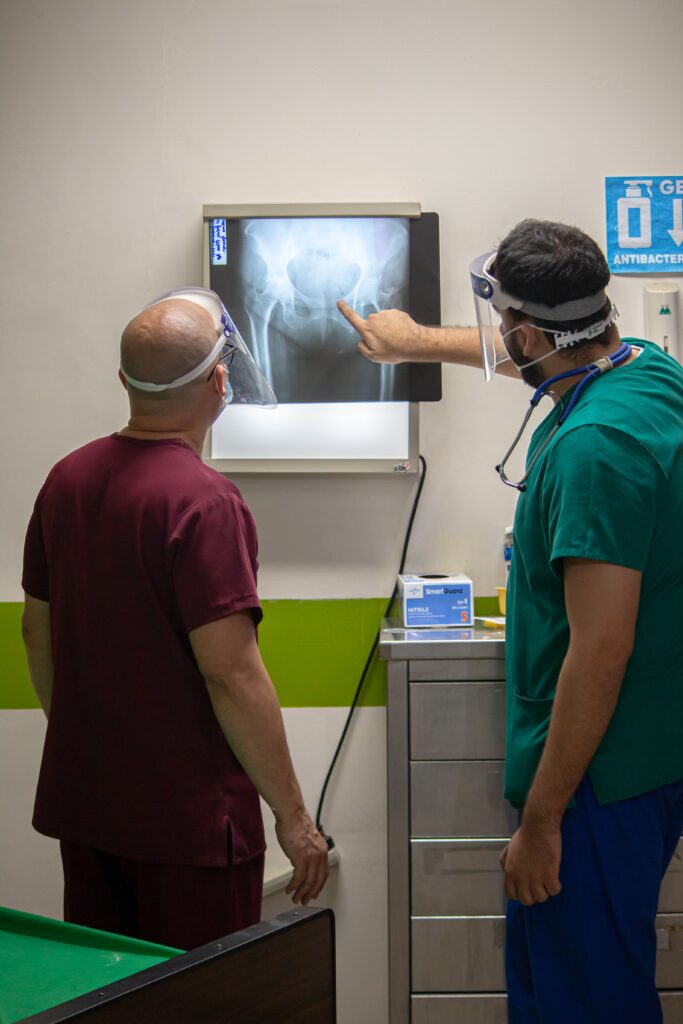
Specialist consultation plays a central role in modern acute care medicine because complex conditions or rapidly evolving symptoms require evaluation beyond the knowledge or authority of a primary care team. A delayed specialist consultation may become the focus of litigation when the specialist’s involvement is alleged to have been pivotal in a patient’s outcome. In other words, since the specialist consultation was delayed, the involvement that would have aided in the intervention of irreversible harm came too late.
Litigators focus on when the consultation became necessary, how urgently the condition required escalation, and whether the delay affected diagnosis, treatment, or survivability. The legal analysis therefore frequently centers on whether the patient remained clinically salvageable during the period in which specialist evaluation was delayed.
Consultation Delays Often Involve Escalating Clinical Risk
Specialist consultation is typically sought because the patient’s condition has grown sufficiently complex, unstable, or uncertain. In cases like this, the primary care team will defer to a specialist who has more knowledge in a particular field. As a result, delayed consultation cases often arise during periods of evolving deterioration rather than stable clinical management.
Underlying circumstances may involve:
- Worsening neurological findings,
- Postoperative instability,
- Evolving sepsis,
- Respiratory compromise,
- Internal bleeding,
- Vascular emergencies, or
- Diagnostic uncertainty requiring high-level evaluation.
The litigation frequently focuses on whether the patient’s progression created objective indicators that consultation should have occurred earlier than it ultimately did. This analysis is highly chronology-dependent. Courts often examine when the patient’s condition first crossed from routine management into a level of instability requiring specialist involvement and whether the delay consumed meaningful treatment opportunities before irreversible injury occurred.
The Central Question Is Often Whether Earlier Consultation Would Have Changed the Outcome
In any healthcare setting, a single delay can have a cascading effect. However, the delay itself is not enough to establish liability. The plaintiff must demonstrate that earlier specialist involvement would likely have altered the patient’s course in a clinically meaningful way.
To do so, the plaintiff’s argument would center on:
- When specialist evaluation should have reasonably occurred,
- Whether earlier diagnostic testing or intervention would have likely followed,
- Whether surgical or procedural windows remained open, and
- Whether the patient’s condition had already become irreversible before consultation ultimately occurred.
For example, a neurosurgical consult delayed during evolving intracranial bleeding may become highly significant if earlier decompression could likely have prevented irreversible compression injury. Similarly, delayed infectious disease, vascular surgery, cardiology, or pulmonary consultation may become central where progressive instability continued while specialized intervention remained absent.
Meanwhile, the defense would position the argument around the inevitability of the injury. The argument is that the patient’s condition would likely have progressed despite earlier specialist evaluation because the underlying pathology was already irreversible.
Delayed Consultation Cases Often Become System Cases
A delay in consultation often exposes an operational weakness that extends beyond the patient’s bedside. In many hospital environments, specialist access depends on multiple interdependent systems functioning reliably under time-sensitive conditions.
A delay in consultation may also lead to:
- Failure to recognize worsening instability,
- Breakdowns in escalation communication,
- Uncertainty regarding responsibility for consultation,
- Delayed response from the consulting service,
- Transfer coordination failures, or
- Limited specialist availability within the institution itself.
Accordingly, litigation may shift from why the specialist was not called to a larger predicament. The court may ask, “How did the institutional escalation structure fail to move the patient toward higher-level evaluation before deterioration becomes irreversible?”
The distinction is important because the analysis will expand beyond a single physician’s judgment into an examination of institutional response systems, consultation protocols, and operational reliability under acute conditions.
Documentation Frequently Determines How the Delay Is Evaluated
Cases involving delayed consultation will depend heavily on timing, as in the timing of recognition, escalation, requests for consultation, specialist response, and subsequent intervention. Each of these facets of the delay will be reconstructed to see if there was any significant influence on the patient’s outcome.
Courts examine the following as evidence:
- Consultation requests and timestamps,
- Nursing escalation documentation,
- Communication records between services,
- Transfer requests,
- Specialist response times, and
- The progression of symptoms preceding consultation.
In some cases, the record may reveal repeated documentation of worsening instability without corresponding escalation toward specialist involvement. In others, providers may disagree regarding when the urgency of the condition was adequately communicated. The litigation often turns not merely on whether consultation eventually occurred, but whether the request matched the level of clinical urgency developing at the time.
Specialist Availability and Transfer Capability May Become Legally Significant
Not every delayed consultation case will move forward in court. Hospitals may lack immediate specialty coverage or procedural capability due to circumstances beyond their control. In these situations, the legal inquiry may extend beyond the consultation request itself and into whether transfer should have occurred earlier.
This may become significant where specialized surgical capability was unavailable; ICU resources were limited; tertiary care transfer was delayed; or institutional limitations impaired timely access to definitive treatment. Courts may examine whether the institution adequately recognized the limits of its own capabilities once the patient’s condition escalated beyond available resources.
Conclusion
Delayed specialist consultation cases involve more than the timing of a phone call or referral request. The central legal inquiry frequently concerns whether evolving deterioration continued during a period when escalation toward higher-level expertise should already have occurred and whether earlier specialist involvement would likely have altered the patient’s outcome before irreversible injury developed.
These matters often require detailed reconstruction of chronology, escalation pathways, communication records, consultation timing, and institutional response systems across the patient’s course of deterioration. Determining causation frequently depends on whether meaningful intervention opportunities remained available during the period in which specialist evaluation was delayed.
Raynes & Lawn evaluates matters involving catastrophic medical injury and complex causation where delayed consultation, escalation failures, and institutional response systems must be analyzed with precision. In these cases, the central issue is often whether progressive deterioration continued without timely specialist involvement because the structures responsible for recognizing instability and moving the patient toward higher-level intervention failed before irreversible harm developed.
Referral and Case Review Inquiries
Raynes & Lawn evaluates a limited number of matters involving serious injury, institutional failure, and legally supportable theories of liability. Reviews are conducted to determine whether the medical, technical, and legal foundations required for responsible litigation are present.
Submissions may be made by individuals, families, or referring counsel. Any review is a threshold evaluation only and does not constitute acceptance of representation.