
Delayed Diagnosis of Traumatic Brain Injuries After Truck Accidents: Why CT Scans May Not End the Investigation
Truck accidents in Pennsylvania and New Jersey generate some of the most severe traumatic brain injury claims. There is an enormous disparity in size and weight between commercial trucks and passenger vehicles. In a collision, there is a high energy transference often caused by violent acceleration, deceleration, rotational movement, compartment intrusion, and multiple occupant impacts. Yet, despite the severity of some crashes, many neurological injuries are not identified during the initial emergency evaluation.
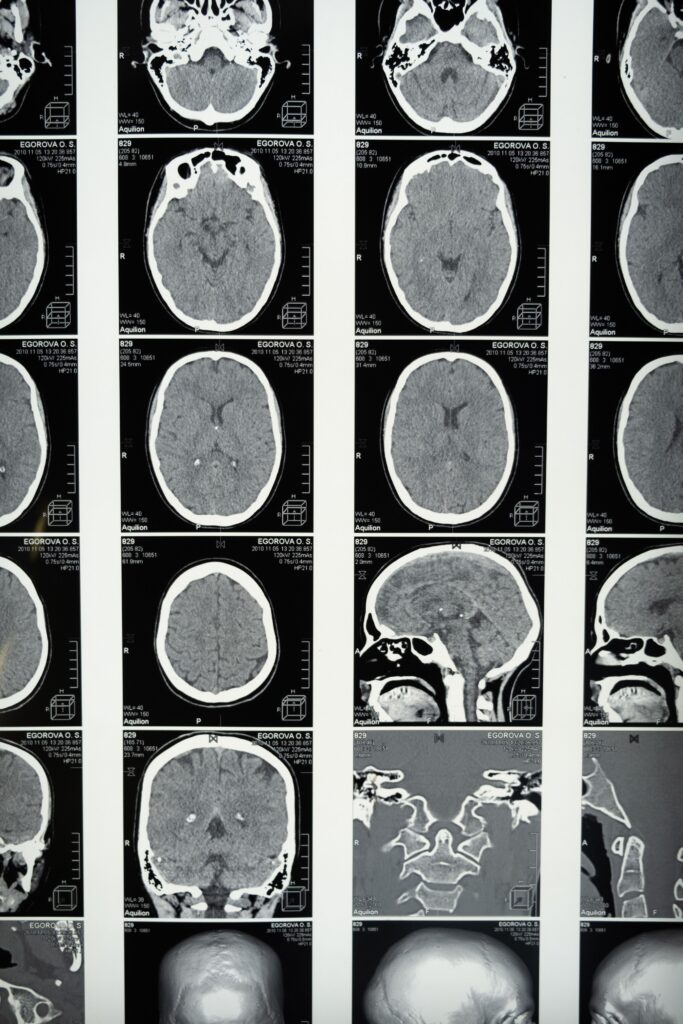
Many delayed diagnosis matters begin with normal CT scans. From a litigation perspective, however, a normal CT scan may mark the beginning of a dispute rather than the conclusion, particularly when a traumatic brain injury has a catastrophic outcome. The central question frequently becomes whether healthcare providers reasonably continued investigating neurological symptoms after acute imaging findings were excluded or whether reliance upon the initial scan contributed to a delay that affected the patient’s outcome.
Why a Normal CT Scan May Not End the Neurological Investigation
In truck accident litigation with TBI, a normal CT scan may become a heavily contested piece of evidence. Defense experts frequently point to negative imaging findings as evidence that no significant neurological injury existed immediately after the collision. Plaintiffs, by contrast, may argue that the scan answered only whether an acute surgical emergency was present and did not resolve whether the patient was experiencing neurological dysfunction requiring further evaluation.
The distinction is important. The diagnostic value of a CT scan depends upon the questions being asked. Effectively, scans rule out an intracranial hemorrhage while leaving the reason a patient is suffering from confusion, memory deficits, and concentration problems unresolved.
For that reason, cases involving delayed diagnosis of traumatic brain injury after a truck accident will focus less on the initial CT scan and more on what happened afterward. If symptoms persisted, worsened, or remained unexplained, the legal analysis frequently examines whether additional investigation was warranted despite the absence of acute imaging findings.
Why Truck Crash Mechanics Often Matter as Much as Medical Imaging
In cases involving traumatic brain injury and truck accidents, evidence often extends far beyond the medical record. Crash reconstruction evidence may establish the magnitude of the forces involved, the direction of impact, the degree of vehicle intrusion, occupant movement within the vehicle, rollover dynamics, or secondary collisions occurring after the initial impact. These facts often become significant because they help experts evaluate whether the injury mechanism was consistent with serious neurological trauma.
Cases may unfold differently between a low-speed collision and a high-energy underride collision. However, the patients in both scenarios may arrive at the hospital and produce similar imaging findings. As a result, causation experts frequently evaluate crash mechanics alongside medical evidence. The legal significance lies in determining whether the known forces involved in the collision should have heightened concern regarding neurological injury despite reassuring initial imaging.
Why Symptom Progression Frequently Becomes the Most Important Evidence
Neurological symptoms evolve over time, meaning that cases involving a TBI become chronology-driven. A patient may initially appear alert and oriented before developing worsening headaches, confusion, memory impairment, speech difficulties, concentration deficits, or changes in behavior. In other cases, symptoms are present from the outset but are attributed to pain medication, emotional distress, orthopedic injuries, fatigue, or the general effects of a serious collision.
For this reason, experts frequently reconstruct the patient’s condition over hours, days, and weeks rather than focusing exclusively on the emergency department evaluation. Medical records may collectively establish a progression that was not fully appreciated during the initial assessment.
The liability question often shifts from whether the injury was immediately diagnosable to whether the accumulating evidence eventually required additional investigation.
Failure to Escalate May Matter More Than Failure to Diagnose
The allegation is rarely that the providers missed a traumatic brain injury. Instead, cases are built around allegations that evolving evidence required escalation long before the diagnosis was made.
Medicine involves a level of uncertainty. Providers are not expected to immediately identify every medical issue or neurological injury. What they are expected to do is respond appropriately when objective findings, persistent symptoms, or worsening conditions suggest that further evaluation may be necessary.
This is why the standard-of-care analysis is pivotal. Were there symptoms that required a neurological consultation, repeat imaging, advanced imaging studies, additional monitoring, or other forms of intervention? In other words, was there evidence that suggested a greater level of action that what was provided? This is one reason delayed-diagnosis cases frequently turn on timeline reconstruction.
Diffuse Axonal Injury Frequently Appears in TBI Cases
Diffuse axonal injury after a truck accident illustrates why normal CT imaging findings do not necessarily end causation analysis. The injury in question results from rotational and shearing forces acting upon the rain during rapid acceleration or deceleration events. An example would be a truck rear-ending a vehicle at an angle that sends the smaller passenger car into a tailspin.
Because truck accidents frequently involve substantial force transfer, diffuse axonal injury is often discussed when patients demonstrate significant neurological deficits despite limited early imaging findings.
This introduces an evidentiary challenge in court. Defendants may emphasize the absence of dramatic radiographic abnormalities. Plaintiffs may point to persistent cognitive impairment, neuropsychological testing, neurological examinations, advanced imaging studies, and functional decline.
Causation Is More Complex Than Proving a Traumatic Brain Injury Exists
Many truck accident victims sustain neurological injuries at the moment of impact. The more difficult question is whether a delayed diagnosis materially increased the extent of harm.
The central dispute often concerns what neurological function remained physiologically salvageable before the alleged delay occurred. Experts may evaluate whether earlier recognition would have altered treatment decisions, monitoring strategies, rehabilitation planning, seizure management, specialist involvement, work restrictions, or other interventions capable of affecting long-term outcome.
This analysis becomes particularly important when defendants argue that the collision itself predetermined the patient’s prognosis.
As a result, causation frequently focuses on the distinction between injury and outcome. A plaintiff may be unable to eliminate the neurological injury caused by the crash itself. The relevant question is whether delayed recognition allowed additional neurological harm to develop beyond what the collision alone would have produced.
Secondary Brain Injury Often Becomes the True Battleground
Secondary brain injury refers to the physiological damage that occurs after the initial trauma. Depending upon the circumstances, this may involve cerebral edema, expanding hemorrhage, seizure activity, inadequate cerebral perfusion, hypoxia, metabolic dysfunction, or other processes capable of causing additional neurological damage.
Secondary brain injury may help form the bridge between delayed diagnosis and damages. Experts will look at whether earlier recognition could have interrupted the progression of neurological injury and prevented permanent damage from occurring. The clearer that progression becomes, the stronger the argument that the delay materially contributed to the patient’s ultimate condition.
For that reason, the causation analysis often focuses on identifying when intervention opportunities existed and when those opportunities were lost.
Conclusion
Delayed diagnosis disputes involving traumatic brain injuries after truck accidents often arise because the absence of acute CT findings does not necessarily resolve whether neurological injury exists. While CT imaging may effectively identify certain emergency conditions, it may leave unanswered questions regarding ongoing cognitive, behavioral, and neurological dysfunction.
As a result, these cases frequently become battles over chronology, symptom progression, crash mechanics, escalation decisions, and secondary injury development. The most significant disputes rarely concern whether imaging was performed. They concern whether the available evidence required additional investigation after symptoms remained unresolved.
Raynes & Lawn evaluates catastrophic injury matters involving traumatic brain injuries, delayed neurological diagnoses, secondary brain injury progression, and complex causation disputes requiring careful analysis of crash mechanics, symptom development, objective testing, and long-term functional impairment. In these cases, liability analysis frequently depends on whether a normal imaging study reasonably concluded the investigation or whether continued neurological evaluation would have identified preventable injury progression.
Referral and Case Review Inquiries
Raynes & Lawn evaluates a limited number of matters involving serious injury, institutional failure, and legally supportable theories of liability. Reviews are conducted to determine whether the medical, technical, and legal foundations required for responsible litigation are present.
Submissions may be made by individuals, families, or referring counsel. Any review is a threshold evaluation only and does not constitute acceptance of representation.