
Family-Provided and Attendant Care as a Documented Need in Catastrophic Pediatric Injury
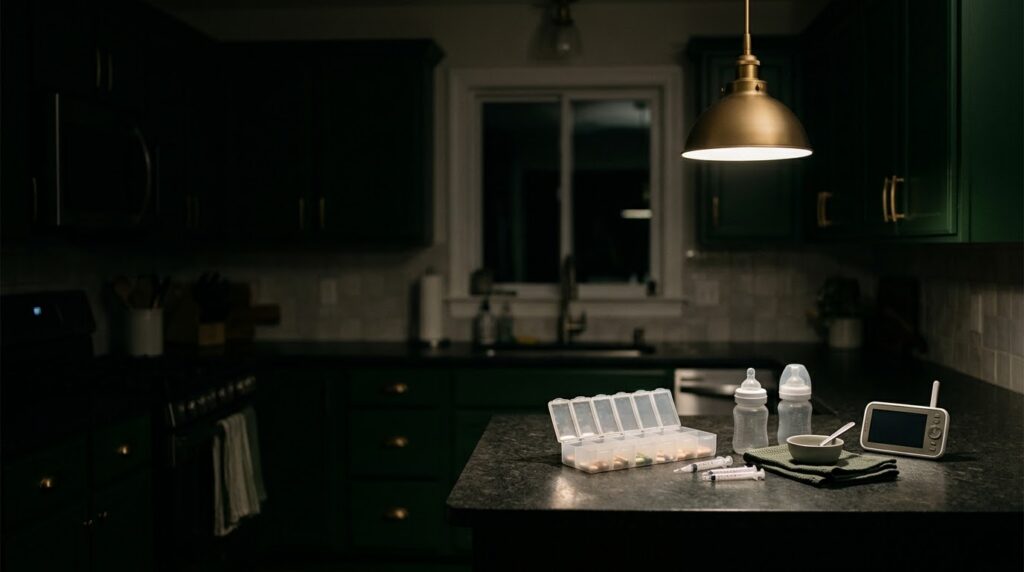
When a child sustains a permanent neurological injury, much of the resulting care is performed at home by parents and other family members: feeding, positioning, medication administration, suctioning, seizure response, transfers, overnight monitoring, and coordination of clinical appointments. That care is real, skilled, and continuous. In a damages analysis, it is also frequently undocumented, undervalued, or omitted.
This discussion addresses how family-provided care, and the respite and attendant care needed to sustain it, should be documented and evaluated. It does not address claims for the family’s own emotional distress, which are governed by separate and narrower rules.
The principle
The Restatement (Second) of Torts § 703, comment g, recognizes that a parent’s recoverable expenses for an injured child’s care may include the reasonable value of the parent’s own services. Courts in many jurisdictions have accepted that the reasonable value of necessary nursing and attendant care is recoverable even where family members provided it without charge, because the need for care, not the identity of the caregiver, is the measure of the loss.
How that principle applies, who holds the claim, and for what period, differ by jurisdiction. In Delaware, for example, parents are generally the proper parties to recover a minor’s past medical expenses during minority (Myer v. Dyer, 643 A.2d 1382 (Del. Super. 1993)). Pennsylvania and New Jersey apply their own rules on the parents’ and child’s respective claims. The jurisdiction-specific analysis should be completed early, because it affects pleading, limitations, and the structure of the damages presentation.
Documenting the work
The evidentiary task is to convert care that families experience as simply daily life into a record that a court can evaluate. That requires identifying, for each category of care:
| Element | What should be documented |
|---|---|
| The task | What is done, for example tube feeding, airway clearance, repositioning, seizure response |
| Frequency and time | How often and for how long, including overnight care |
| Skill level | Whether the task would require a licensed nurse, a trained aide, or neither if purchased |
| Basis | The physician or therapist recommendation, discharge instruction, or care plan that requires it |
| Change over time | How the care burden has evolved and what is expected |
Contemporaneous care logs, home nursing denials or shortages, discharge teaching records, and treating clinicians’ descriptions of the care required are the core evidence. A family’s account is evidence; it is strongest when it is corroborated by the clinical record.
Respite and the sustainability of family care
A future-care projection that assumes family members will indefinitely provide round-the-clock care without relief is not realistic, and it is vulnerable on cross-examination from both directions. The question for the life care planner and the treating team is what level of professional, attendant, and respite support is required for care to be safe and sustainable over the child’s lifetime, including as parents age.
Respite care, meaning planned, temporary professional care that allows family caregivers to rest, should therefore be evaluated as a care need with a clinical and practical basis, not as a discretionary benefit. Its frequency and level of skill should be stated, and its cost tied to the services actually available in the region where the family lives.
Valuation and its limits
The value of family-provided care is typically measured by the market cost of equivalent services at the appropriate skill level. The analysis must avoid two errors. It should not price every task at the rate for licensed nursing where the task does not require it. Nor should it value skilled care, such as airway management in a child with a tracheostomy, at the rate for unskilled assistance because a parent performs it.
Public benefits, private insurance, and Medicaid waiver services may supply some care. Their existence does not eliminate the need, and their legal effect on recovery differs by jurisdiction and funding source. In Pennsylvania medical professional liability actions, the MCARE Act also governs how future medical and related expenses are paid, a point addressed in the firm’s discussion of life care plans after catastrophic childhood injury.
The burden on the family as evidence of the injury’s consequences
The physical and practical demands of caregiving are part of the consequences of the injury, and they should be presented with the same discipline as any other element of damages: specific, documented, and tied to the child’s clinical needs. Overstatement weakens the presentation. Understatement, which is far more common, leaves real losses uncompensated.
Scope
None of this establishes liability. Evidence of extensive care needs proves the consequences of an injury, not its cause. In catastrophic neurological injury litigation, the mechanism, the departure from the standard of care, and causation require independent proof. The firm’s discussion of how damages are proven in neurological injury cases addresses the relationship between those elements.
Referral and Case Review Inquiries
Raynes & Lawn evaluates a limited number of matters involving serious injury, institutional failure, and legally supportable theories of liability. Reviews are conducted to determine whether the medical, technical, and legal foundations required for responsible litigation are present.
Submissions may be made by individuals, families, or referring counsel. Any review is a threshold evaluation only and does not constitute acceptance of representation.