
Severe Traumatic Brain Injury Without Skull Fracture: Proving Mechanism of Injury
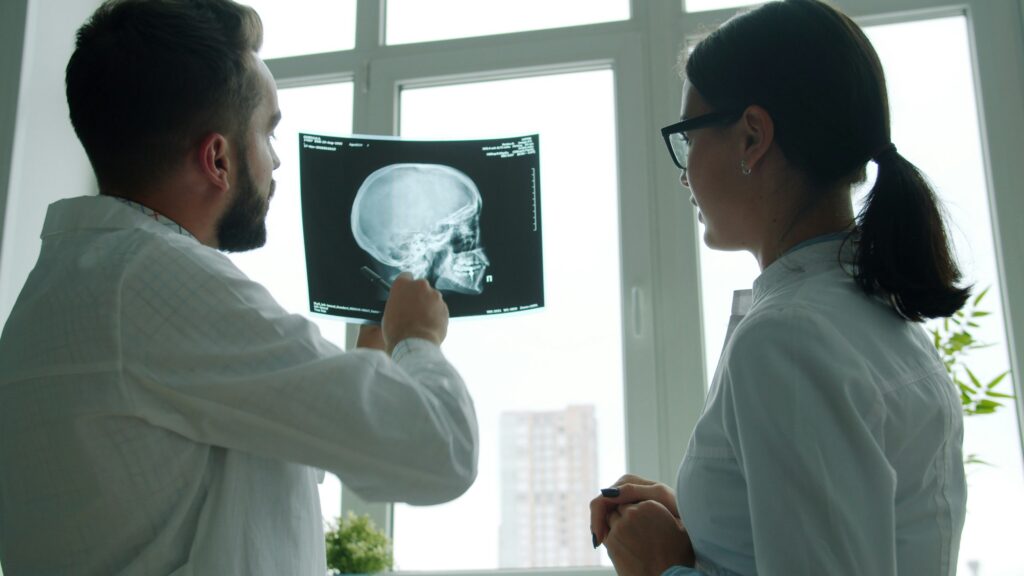
Severe traumatic brain injury is often associated with visibly catastrophic trauma, including penetrating injury, depressed skull fracture, or extensive external head damage. Should this occur, there is little room for contest. However, in litigation, some of the most contested neurological injury cases involve profound intracranial damage produced without a skull fracture. The absence of the fracture goes against public understanding of a severe TBI, and so it is disputed.
These cases typically focus less on whether neurological injury occurred and more on how the forces involved were medically capable of producing the brain damage. As a result, litigation frequently turns on biomechanical analysis, neuroradiology, evolving neurological findings, and expert reconstruction of how acceleration, deceleration, rotational force, vascular compromise, or diffuse axonal injury may occur independently of skull disruption.
The legal dispute is therefore not limited to diagnosis. It concerns whether the claimed mechanism of injury remains scientifically and medically consistent with the neurological outcome that followed.
Absence of Skull Fracture Does Not Eliminate the Possibility of Catastrophic Brain Injury
The skull and the brain handle traumatic force differently. A skull fracture reflects failure of the bone, whereas a traumatic brain injury can occur from movement, deformation, stretching, vascular disruption, or rotational acceleration occurring within the cranial vault. Consequently, someone may sustain a devastating brain injury even when imaging reveals no fracture line or penetrating cranial defect.
An example of this would be shaken baby syndrome.
However, in some cases, the absence of a fracture may initially obscure the severity of neurological damage because external findings appear comparatively limited during early evaluation.
Litigation often centers on whether the clinical progression remained compatible with the forces allegedly involved. Plaintiffs typically argue that brain tissue, vascular structures, and axonal pathways sustained injury through rapid acceleration or rotational loading despite preservation of the skull itself. Defendants, by contrast, frequently contend that the absence of fracture undermines the claimed severity of force exposure or suggests an alternative explanation for the neurological outcome.
Mechanism of Injury Frequently Becomes the Central Evidentiary Dispute
Both parties may agree that catastrophic neurological impairment exists while sharply disputing how the injury occurred. As such, the mechanism of the injury is the focus. Questions about how the alleged event could realistically produce the observed damage are asked.
The analysis often extends beyond general descriptions of injury and trauma. Experts are often brought in to examine:
- Acceleration and deceleration dynamics,
- Rotational versus linear force exposure,
- Occupant movement within a vehicle,
- Fall biomechanics,
- Restraint system interaction,
- Secondary impact points,
- Loss of consciousness chronology,
- Radiographic progression, and
- The timing of neurological deterioration.
Expert testimony may explain that rotational acceleration, shearing injury, vascular disruption, and diffuse microscopic damage can occur even where external trauma appears comparatively modest. The dispute therefore becomes highly dependent upon whether the neurological findings remain medically coherent when analyzed against the biomechanics of the incident itself.
Diffuse Axonal Injury Often Complicates Proof Analysis
Diffuse axonal injury presents particular evidentiary complexity because severe neurological dysfunction may exist despite limited findings on early imaging studies. Unlike large focal hemorrhage or penetrating trauma, diffuse axonal injury frequently involves microscopic or multifocal damage caused by rapid rotational or acceleration-deceleration forces affecting neuronal pathways throughout the brain.
In litigation, plaintiffs commonly rely upon neurological examination findings, MRI sequencing, neurocritical care records, long-term cognitive impairment, and neuropsychological assessment to establish that widespread traumatic injury occurred despite the absence of overt structural destruction visible on initial CT imaging.
The defense may challenge both diagnosis and causation. Defense experts sometimes argue that imaging abnormalities remain nonspecific, that neurological decline reflects secondary complications rather than traumatic axonal disruption, or that preexisting medical conditions better explain the patient’s functional deterioration.
As a result, these cases frequently depend upon whether the overall clinical course aligns with traumatic neurological injury even where no single radiographic finding conclusively establishes the diagnosis in isolation.
Chronology Frequently Determines Causation Strength
In severe traumatic brain injury litigation, chronology frequently becomes more persuasive than images or biomechanical explanations. Where skull fracture is absent, the timeline itself fills the blanks and aids in the reconstruction of causation.
Courts and experts often examine whether the patient demonstrated a neurological pattern that remained internally consistent from the moment of traumatic exposure forward. A patient who initially appears oriented but progressively develops confusion, agitation, pupillary asymmetry, seizure activity, declining Glasgow Coma Scale scoring, or delayed radiographic abnormality presents a markedly different causation profile than a patient whose neurological deterioration emerges after unrelated intervening events or prolonged physiological instability.
The progression matters because a TBI is not static or instantaneous. Secondary injury processes including swelling, vascular compromise, oxygen deprivation, intracranial pressure elevation, and delayed hemorrhagic progression may continue evolving for hours after the initiating trauma. As a result, the absence of immediate findings does not necessarily resolve the causation inquiry.
In many cases, the litigation turns on whether the neurological deterioration follows a medically coherent trajectory. Defense analysis often focuses on interruptions within that progression, particularly where the patient has competing vascular disease, intoxication, metabolic abnormalities, prior neurological impairment, or subsequent medical complications capable of independently producing cognitive decline. The evidentiary dispute therefore becomes less about whether severe impairment ultimately developed and more about whether the physiological sequence remains attributable to traumatic force rather than an alternative pathological process.
Expert Testimony Often Determines Whether the Injury Mechanism Appears Scientifically Coherent
Expert testimony can serve a function beyond providing an educated opinion. In court, an expert is not merely disputing the conclusion but translating technical neurological and biomechanical concepts into an understandable version for the jury.
Severe brain injury without skull fracture can appear counterintuitive outside medical and biomechanical settings because visible bone destruction is commonly associated with assumptions about injury severity. Consequently, experts are required to explain that the physics behind an event can produce catastrophic neurological impairment without fracturing the skull itself.
The persuasiveness of that testimony often depends less on conclusory assertions and more on whether the expert can integrate multiple disciplines into a medically coherent reconstruction. Neuroimaging, critical care progression, emergency medicine findings, rehabilitation deficits, neuropathology, and biomechanics are rarely evaluated in isolation. Courts instead examine whether the overall explanation remains scientifically consistent across the full evidentiary record.
Care must be taken, however, when experts are explaining the medical and biomechanical opinions. Relying too heavily to theoretical models, for one, without sufficiently connecting the opinion to the patient’s course can reduce expert credibility.
Documentation and Imaging Interpretation May Become Central to Liability Analysis
In traumatic brain injury litigation, medical records shape how the injury is understood. A single neurological notation recorded shortly after the traumatic event may later assume substantial evidentiary importance when viewed against subsequent deterioration. Early confusion, disorientation, abnormal speech, unequal pupils, repeated vomiting, agitation, or subtle cognitive impairment may initially appear clinically nonspecific when examined in isolation. After catastrophic progression occurs, however, those same findings are frequently reevaluated as potential indicators of evolving intracranial injury.
Reconstruction of the case with the medical records and images can reveal a progression pattern that was not fully apparent during the early stages of treatment. Some facets of a case such as a TBI without a skull fracture will only be understood when viewed retrospectively.
Conclusion
Severe traumatic brain injury without skull fracture presents complex questions involving biomechanics, neuroradiology, causation, and neurological progression. The central legal dispute frequently concerns whether the forces involved were medically capable of producing catastrophic intracranial injury despite the absence of visible skeletal failure. Resolving these matters often requires detailed reconstruction of mechanism, chronology, imaging interpretation, neurological deterioration, and competing medical explanations for the patient’s condition.
Raynes & Lawn evaluates catastrophic neurological injury matters involving complex causation, disputed biomechanics, delayed neurological deterioration, and mechanism-of-injury analysis requiring extensive medical and scientific reconstruction. In these cases, liability analysis frequently depends on whether the neurological outcome remains medically and scientifically consistent with the traumatic forces at issue despite the absence of overt structural cranial fracture.
Referral and Case Review Inquiries
Raynes & Lawn evaluates a limited number of matters involving serious injury, institutional failure, and legally supportable theories of liability. Reviews are conducted to determine whether the medical, technical, and legal foundations required for responsible litigation are present.
Submissions may be made by individuals, families, or referring counsel. Any review is a threshold evaluation only and does not constitute acceptance of representation.