
Proving Systemic Negligence in Teaching Hospitals
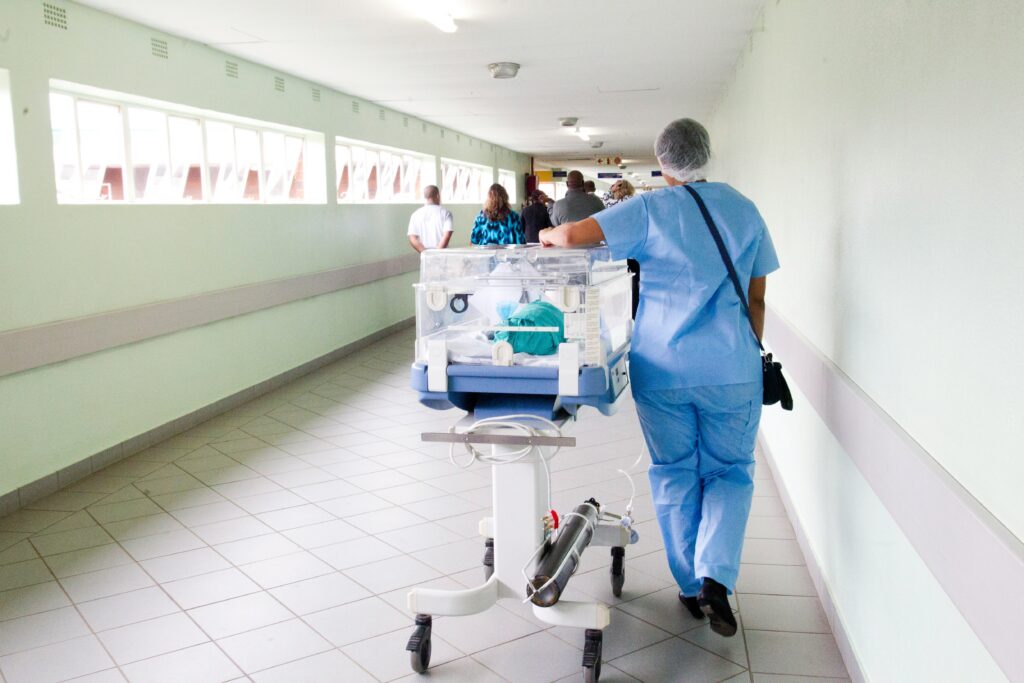
Teaching hospitals have a unique and pivotal position in medicine and healthcare. Not only are these places advanced care centers where training brings forth the next generation of physicians. Teaching hospitals also have facilities where the most complex and high-risk patients are referred. However, this combination creates opportunity and risk. Care is delivered through layered teams—attendings, fellows, residents, nurses, and specialists—operating within structured hierarchies that are designed to promote learning while maintaining patient safety.
However, when catastrophic injury occurs in this setting, litigation rarely focuses on a single decision. Instead, the investigation often broadens to whether the system itself functioned as intended. Proving systemic negligence requires showing that the structure, supervision, or coordination within the hospital broke down in a way that contributed to preventable harm.
The Structure of Care in Teaching Environments
In teaching hospitals, care is distributed across multiple levels of responsibility. Residents and fellows frequently perform initial evaluations and implement care plans, while attending physicians provide oversight and final authority. This model depends on clear communication, defined escalation pathways, and active supervision.
The system allows for education and care to happen at the same time. It is not inherently flawed. In many cases, care may be enhanced by bringing multiple perspectives to complex problems. When information does not move efficiently, when supervision is insufficient, or when responsibility becomes diffused rather than clearly assigned is where the structure fails and risk increases.
In litigation, understanding how the team was organized at the time of the event is essential. The question is not simply who made a decision, but how that decision was reviewed, supported, or corrected within the system.
Supervision and the Limits of Delegation
A central issue in systemic negligence cases is the adequacy of supervision. While trainees are expected to participate actively in patient care, their work is not meant to occur in isolation. Attending physicians are responsible for ensuring that care decisions align with accepted standards, particularly in high-risk situations.
Breakdowns occur when supervision is delayed, unavailable, or ineffective. This may involve failure to review critical findings, failure to respond to escalating concerns, or reliance on trainees to manage situations beyond their level of experience.
From a legal perspective, these failures are not viewed as individual lapses alone. They are examined as part of a broader system that allowed those lapses to occur. The question becomes whether the hospital’s structure provided adequate safeguards to ensure appropriate oversight.
Communication Failures Across Layers of Care
In teaching hospitals, communication moves vertically and horizontally between trainees and attendings, departments and specialties. This complicated communication is at risk of breaking down when one segment is understaffed or delayed, for example. As such, critical information may not reach the individuals responsible for making decisions.
Communication failures can take many forms. A resident may recognize a concerning change but delay escalation. A nurse’s observation may not be effectively communicated to the physician team. Consultants may not be involved in a timely manner, or their recommendations may not be implemented.
Litigation often focuses on these points of disconnect. The issue is not simply that communication could have been better, but that the failure to communicate contributed to a delay or error that had clinical consequences.
Institutional Policies and Real-World Practice
Teaching hospitals have detailed policies governing supervision, escalation, and patient safety to ensure that the structure of care functions reliably, even in complex environments. The policies are also used as a benchmark for evaluating what should have occurred. When there is a gap between written policy and actual practice, the gap becomes significant. Plaintiffs may argue that the institution failed to enforce its own standards, creating conditions in which errors were more likely.
Defense arguments often emphasize that policies are guidelines rather than rigid rules, and that clinical judgment must be exercised in context. The analysis therefore turns on whether the departure from policy was reasonable or whether it reflects a broader breakdown in the system.
Patterns Rather Than Isolated Events
Proving that medical negligence was systemic requires looking beyond a single incident. Patterns within the institution—such as recurring delays in escalation, chronic understaffing, or repeated communication failures—may support the argument that the issue is structural rather than incidental. Patterns may be identified through internal records, prior incidents, or testimony regarding how the unit typically functions.
While a single adverse event may be explained as an outlier, repeated issues suggest that the system itself is not operating as intended.
Courts evaluate whether these patterns are sufficiently connected to the injury at issue. The goal is not to show that the institution is imperfect, but that its systemic deficiencies played a role in the specific harm suffered.
Causation in System-Based Claims
Systemic negligence must be tied to causation for the case to move forward. It is not enough to show that the system had flaws (no system is perfect). The flaws must be shown to have contributed to the injury. Furthermore, the connection cannot be tenuous.
Causation is developed by linking a system failure like delayed supervision or ineffective communication to a specific point in the clinical timeline. Plaintiffs will argue that the systemic failure altered the outcome the same way timely intervention would. The argument is that, had the system functioned properly, the necessary decision or action would have occurred in time. Instead, there was a span of time where the issue worsened and went unattended.
Defense experts may argue that, even if system imperfections existed, they did not affect the course of the patient’s condition. They may also emphasize that complex cases can have poor outcomes despite appropriate care.
These causation disputes require careful reconstruction of both the clinical events and the way the system operated during those events.
The Role of Documentation and Testimony
The medical record provides part of the picture, but systemic cases often rely heavily on testimony. Providers may be asked to explain how supervision was structured, how decisions were communicated, and how the team functioned in practice.
Discrepancies between expected processes and actual conduct can become central to the case. For example, if policies require attending involvement at a certain stage, but testimony suggests that involvement was delayed or minimal, that gap may support a claim of systemic failure.
Staffing records, call schedules, and internal communications may also be examined to understand how the system operated at the time.
Framing the Case for Court
Systemic negligence at teaching hospitals is presented as a series or pattern of errors. The aim is to show that the environment in which care was delivered made those errors more likely and more consequential. Had the system been functioning properly, the injury would not have happened. To show the pattern, institutional structure is translated into a narrative that can be understood by the jury. The focus is on how the system functioned in real time, as well as who was responsible, how information moved, and where the breakdown occurred.
The defense will aim to narrow the focus on individual decisions to broaden the narrative and allow for instances where the care provided met accepted standards. Ideally, the defense aims to show that the pattern established by the plaintiff was not relevant to the specific outcome.
Conclusion
Proving systemic negligence in teaching hospitals involves examining how care is organized, supervised, and delivered across multiple levels of responsibility. These cases are not about whether the institution provides advanced care or trains future physicians. They are about whether the systems in place operated effectively when it mattered most.
The analysis requires connecting structural features—supervision, communication, staffing, and policy—to the clinical events that led to injury. When those connections are clear, the case moves beyond isolated decision-making to a broader evaluation of how the system itself contributed to harm.
Because of that complexity, these claims demand a disciplined approach to both medical and institutional evidence. They are pursued where the record supports a coherent account of system failure tied directly to the outcome, and where that account can withstand the competing explanations that will be presented in court.
Referral and Case Review Inquiries
Raynes & Lawn evaluates a limited number of matters involving serious injury, institutional failure, and legally supportable theories of liability. Reviews are conducted to determine whether the medical, technical, and legal foundations required for responsible litigation are present.
Submissions may be made by individuals, families, or referring counsel. Any review is a threshold evaluation only and does not constitute acceptance of representation.