
Mobility Equipment in Catastrophic Pediatric Injury Claims: Medical Necessity, Coverage, and Medicaid Reimbursement
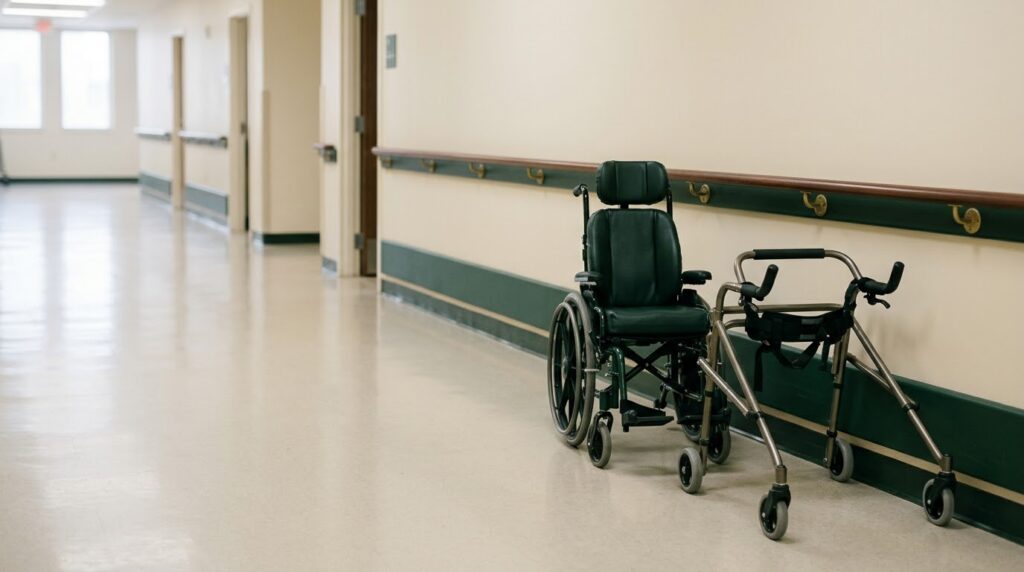
Wheelchairs, gait trainers, standers, and seating systems are recurring items in the future-care needs of a child with permanent neurological impairment. In litigation, three questions about that equipment must be kept distinct: whether it is medically necessary, how it is funded today, and how both past funding and future need are treated in a claim. A conclusion on one does not answer the others.
Medical necessity is established clinically
An equipment recommendation should identify the functional limitation it addresses, the purpose of the device, the settings in which it will be used, and any fitting, positioning, or support requirements. A diagnosis does not supply that reasoning, and the name of a device on a list does not establish need.
Where equipment serves more than one setting, each purpose should be described. A recommendation for classroom positioning answers a different question from one for mobility throughout the day. For damages purposes, these recommendations must come from qualified clinicians; in Pennsylvania, future medical expenses must be proven by expert testimony that they will be incurred and as to their reasonable cost (Mendralla v. Weaver Corp., 703 A.2d 480 (Pa. Super. 1997)).
Current funding: Medicaid, prior authorization, and schools
For Medicaid-enrolled children under 21, the Early and Periodic Screening, Diagnostic, and Treatment benefit described in CMS’s EPSDT coverage guide requires coverage of medically necessary services within the statutory categories, including medical equipment and supplies, even where adult coverage in the state is narrower. That is not a guarantee of any particular model or feature; individualized medical necessity and utilization review still apply.
Pennsylvania’s prior authorization framework covers durable medical equipment requiring authorization or a program exception. A prescription and an authorization are different documents, and the record should show what was requested, what support accompanied it, and what the written decision actually determined. A denial is not a clinical determination that the child has no need.
Schools may carry a separate, narrower responsibility. IDEA’s assistive technology regulation requires devices necessary for the child’s educational program and addresses home use where the IEP team determines it is necessary for a free appropriate public education. It does not make a school responsible for all equipment a child requires.
Medicaid reimbursement from a recovery
Where Medicaid has paid for a child’s care, the state’s right to reimbursement from a tort recovery is a central issue for counsel. Federal law limits that right to the portion of a recovery representing medical care: Arkansas Department of Health & Human Services v. Ahlborn, 547 U.S. 268 (2006), barred recovery from non-medical portions, and Wos v. E.M.A., 568 U.S. 627 (2013), rejected an irrebuttable statutory allocation. In Gallardo v. Marstiller (U.S. 2022), the Supreme Court held that a state may seek reimbursement of its past payments from the portion of a settlement allocated to medical care, past or future.
In Pennsylvania, the Department of Human Services asserts these claims through its Division of Third Party Liability under 62 P.S. § 1409, a framework the Third Circuit upheld in Tristani v. Richman. Compliance with the statute’s notice requirements from the outset of a case is consequential.
Collateral sources differ across the three jurisdictions
In Pennsylvania medical professional liability actions, the MCARE Act limits recovery of past medical expenses to the extent covered by collateral sources, subject to enumerated exceptions (40 P.S. § 1303.508), and governs the periodic payment of future medical damages (40 P.S. § 1303.509). The interaction between those provisions and a Medicaid reimbursement claim requires case-specific analysis.
Delaware’s Supreme Court has held that where Medicaid paid past medical expenses, the amount Medicaid actually paid is conclusive of their reasonable value. New Jersey applies its own collateral-source rules. None of these rules can be assumed from another jurisdiction’s practice.
Replacement and future-need projections
When equipment is projected in a life care plan, the projection should state how long the recommended arrangement is expected to remain suitable and what supports that expectation. Growth, refitting, maintenance, and replacement should be grounded in professional recommendation, not a universal interval.
Supplier pricing should be dated and tied to the specific item. A precise price does not validate an unsupported replacement frequency or an item no clinician has recommended. Present coverage does not guarantee future payment, and the legal treatment of future funding sources is a separate question.
Need is not cause
Mobility equipment may be significant evidence of the consequences of permanent neurological injury. It does not establish why the impairment arose or whether negligent care contributed to it. The child’s functional needs warrant accurate documentation; any claim of liability must rest on its own medical and legal foundation, addressed in the firm’s discussion of how damages are proven in neurological injury cases.
Referral and Case Review Inquiries
Raynes & Lawn evaluates a limited number of matters involving serious injury, institutional failure, and legally supportable theories of liability. Reviews are conducted to determine whether the medical, technical, and legal foundations required for responsible litigation are present.
Submissions may be made by individuals, families, or referring counsel. Any review is a threshold evaluation only and does not constitute acceptance of representation.