
Catastrophic injury litigation is not defined by the severity of an outcome alone. It is defined by whether extraordinary harm resulted from preventable failures in duty, whether by individuals or within systems governing safety, operation, or care. These matters involve irreversible impairment, profound disability, or wrongful death arising from negligence, defect, systemic breakdown, or structural failure. They demand disciplined analysis of causation, admissible evidence, and legal responsibility—not hindsight criticism or sympathy.
Raynes & Lawn handles only a narrow category of catastrophic injury matters where the available evidence, expert testimony, and governing law align to support accountability under sustained adversarial scrutiny.
A catastrophic injury can happen in any realm—birth, delivery, at work, on the road, or elsewhere. What makes it catastrophic is that the injury permanently alters a person’s physical or neurological capacity and eliminates independence in activities of daily living. Cognition is impaired, or there is an irreversible loss of function. Such injuries typically require long-term or lifelong support, extensive medical care, and adaptive living arrangements.
Examples include:
Not every serious injury can be called “catastrophic” in this legal sense. The injury must meet both medical severity and legal causation requirements to be viable in catastrophic injury litigation.
A catastrophic injury claim must establish, through admissible evidence and qualified expert analysis:
Cases that cannot satisfy each element—particularly causation—do not withstand serious litigation. The evidentiary burden in catastrophic matters is exacting because the injuries are severe and the defenses are resourced accordingly.
In catastrophic injury litigation, causation is rarely obvious and never assumed. The legal inquiry is not whether harm occurred, but whether:
This analysis often involves reconstruction of timelines, interpretation of technical data (medical, engineering, or forensic), exclusion of alternative causes, and evaluation of institutional protocols or systemic failures.
Because catastrophic injury claims require extensive proof infrastructure, Raynes & Lawn evaluates only a limited set of matters, including those involving:
The firm’s selectivity protects the integrity of the cases the firm pursues and aligns resources with the complexity of the legal and factual issues involved.
Catastrophic injury cases arise from a wide range of sources. The legal issues differ by context, but all hinge on causal structure and proof.
The following scenarios describe a myriad of possibilities in which catastrophic injury may occur:
Serious collision cases require reconstruction of impact forces, vehicle dynamics, operator conduct, and compliance with safety regulations.
Accidents at industrial or construction sites implicate regulatory frameworks, duty allocation among contractors, site governance, and adherence to relevant codes.
Product liability matters involve technical documentation, design analysis, and scientific testing to establish defect, risk, and causal contribution.
Claims involving medical negligence or system breakdowns require disciplined medical chronology reconstruction, expert interpretation of clinical data, and exclusion of alternative etiologies.
High-impact crashes or device failures implicate operational standards, maintenance protocols, and corporate accountability.
For each of these contexts, mere injury is insufficient. Litigable cases depend on a defensible causal narrative grounded in admissible proof. The burden of such proof typically falls upon the plaintiff.
Raynes & Lawn does not pursue cases involving:
This insistence on evidentiary rigor reflects both the seriousness of the injuries involved and the responsibility inherent in litigating matters of this magnitude.
Catastrophic injury matters are typically defended aggressively through intensive discovery, technical expert challenges, and dispositive motions. Responsible representation requires readiness for that environment. Matters advance only after:
This readiness is not optional; it is a prerequisite for meaningful advocacy.
Pennsylvania’s statute of limitations generally imposes a two-year deadline for personal injury claims, measured from the date of injury or from discovery of negligence where applicable. Special rules may apply for minors or claims involving government entities. Early evaluation is critical to preserve rights and support comprehensive investigation.
Catastrophic injury litigation is not defined by emotional appeal or severity alone. It requires disciplined proof, credible expert testimony, and a clear causal connection between preventable failure and life-altering harm. Raynes & Lawn’s practice in this area reflects rigorous analysis and readiness for sustained adversarial scrutiny.
If the circumstances surrounding a catastrophic injury meet the standards outlined above, our firm can review relevant records to determine whether further evaluation is appropriate. Catastrophic injury cases are referred when technical complexity, systemic involvement, or adversarial demand exceeds the routine litigation of other counsel. The review conducted by Raynes & Lawn is a threshold assessment—not acceptance of representation—and focuses on whether the legal foundations necessary for responsible litigation are present.
Whether originated or referred, every matter must satisfy the same institutional standards of duty, deviation, causation, and proof.
Raynes & Lawn evaluates a limited number of matters involving catastrophic injury, institutional failure, or complex questions of legal causation. Reviews are conducted to determine whether the medical, technical, and evidentiary foundations required for responsible litigation are present.
Submissions may be made by injured individuals, families, or referring counsel. Any review is a threshold evaluation only and does not constitute acceptance of representation.
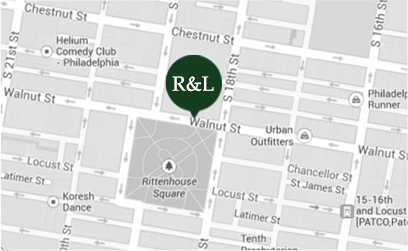
2400 Market Street, Suite 317
Philadelphia PA 19103
Phone: 1-215-568-6190
Toll-Free: 1-800-535-1797
Fax: 1-215-988-0618
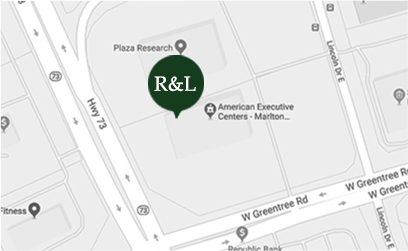
10,000 Lincoln Drive E •
One Greentree Ctr, Ste 201
Marlton, NJ 08053-1536
Phone: 1-856-854-1556
Toll-Free: 1-800-535-1797
Fax: 1-215-988-0618