
Product Recall Evidence and Its Role in Establishing Notice
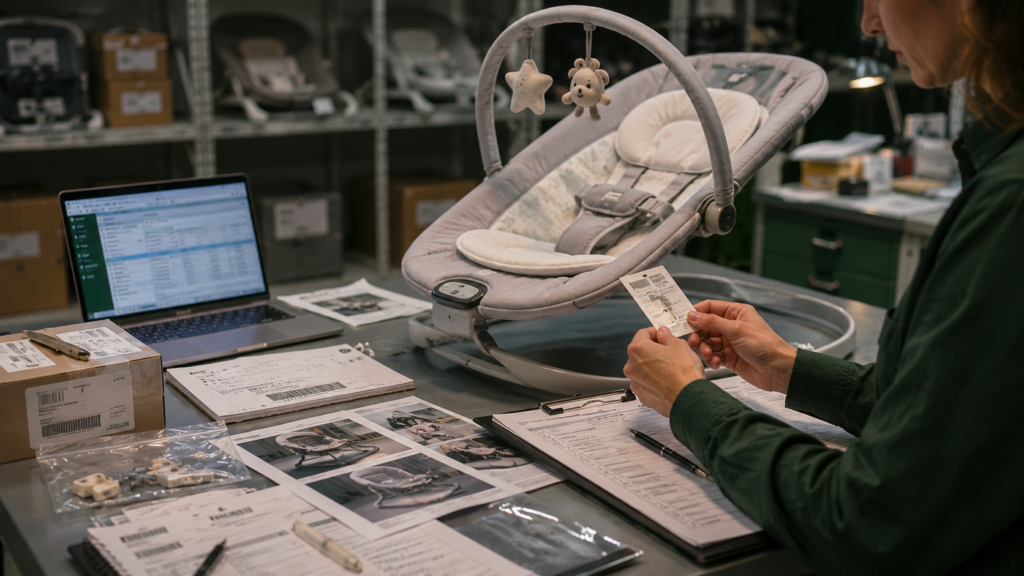
A product recall is frequently treated, in ordinary conversation, as an admission: the company recalled it, so the company must have known it was dangerous. That inference does not survive contact with the evidence rules that actually govern this issue. A recall is not proof that a product was defective, and it is not proof that the specific unit involved in a given injury contained the condition the recall addressed. What a recall, and the broader record surrounding it, can establish is something narrower and in some ways more consequential: notice, meaning the point at which a manufacturer knew, or through reasonable diligence should have known, that its product posed a risk, and what it did, or failed to do, once that knowledge existed.
A Recall Is Not Proof of a Defect
Federal Rule of Evidence 407 bars the use of a subsequent remedial measure, a step taken after an injury that would have made the injury less likely had it been taken earlier, as proof of negligence, culpable conduct, a product or design defect, or the need for a warning. A 1997 amendment extended the rule expressly to product-defect and warning claims, resolving what had previously been a split among federal courts over whether the rule applied to strict liability theories at all. Pennsylvania’s Supreme Court reached the same conclusion under the state’s own evidentiary framework in Duchess v. Langston Corp., 769 A.2d 1131 (Pa. 2001), extending the subsequent-remedial-measures exclusion to product-defect litigation and recognizing the risk that jurors will otherwise treat a later safety improvement as a concession that the earlier product was defective.
The policy behind the rule is straightforward: a manufacturer should not be discouraged from improving a product’s safety out of fear that doing so will be used against it in litigation. That rationale has a direct consequence for how a recall should be discussed. A recall implements a safety response to a possibility of harm across a class of products; it does not, by itself, establish that every unit in that class, or the particular unit at issue in a case, actually contained the underlying condition. The proper analytical move is not to ask whether a recall occurred, but to ask what specific evidence exists connecting the plaintiff’s product, and the defect described in the recall, to the injury actually claimed.
What a Recall Can Actually Show: The Timing of Notice
The relevant post-sale doctrine holds manufacturers to a continuing obligation. A manufacturer is generally held to the standard of an expert in its field, obligated to keep reasonably current with developments in its area and to warn of dangers it knew or should have known based on information reasonably available to it, even after a product has already left its control. This post-sale duty to warn is well established in product liability jurisprudence, including New Jersey’s treatment of the issue in cases such as Feldman v. Lederle Laboratories, which addressed a manufacturer’s obligation to warn of a side effect that became known only after a drug had already been marketed. New Jersey’s Products Liability Act codifies a version of this obligation directly, tying it to whether the risk is substantial, whether the affected persons can be identified and are reasonably unaware of the risk, whether a warning can be effectively communicated, and whether the risk is great enough to justify the burden of warning.
A recall, when it eventually occurs, can serve as one data point in reconstructing when a manufacturer’s knowledge crossed that threshold. It is not, however, the only source of that evidence, and treating it as the whole timeline is a mistake that weakens rather than strengthens a notice argument.
The Recall Date and the Notice Date Are Rarely the Same
A public recall announcement marks the end of an internal process, not its beginning. Before an announcement, a manufacturer typically moves through a sequence: a safety signal such as a complaint, warranty claim, or test anomaly; internal receipt and evaluation of that information; accumulation of additional similar reports; a determination of whether regulatory reporting is triggered; a decision to take corrective action; and only then, the public announcement itself. For consumer products, the Consumer Product Safety Commission’s reporting framework illustrates why that internal sequence matters. Manufacturers, importers, distributors, and retailers are generally required to report to the agency within a short window after obtaining information that reasonably supports the conclusion that a product may present a substantial hazard, and that reporting obligation is triggered by an information standard, not a certainty standard; a company is not permitted to wait for a confirmed root-cause finding or for an injury to actually occur before the reporting duty attaches. A regulatory filing made under that standard does not itself constitute a finding that a defect exists, and a company can also pursue a fast-track corrective action process without a regulatory determination that the product contains a defect at all.
The practical consequence is that the internal record preceding a recall, prior complaints, testing data, engineering evaluations, and the correspondence surrounding a regulatory report, is frequently the more probative evidence of when notice actually existed, rather than the recall announcement date itself. A case built entirely around the fact that a recall eventually happened has skipped past the evidence that actually answers the notice question.
A Recall After the Injury Cannot Create Notice Before It
A recall issued after the injury at issue cannot, by definition, establish that the manufacturer had notice before that injury occurred as a result of the later recall itself; the timing makes that logically impossible, and Rule 407 independently bars using the recall itself to prove the underlying defect. That does not mean a post-injury recall is irrelevant to everything in the case. The investigation, testing, and internal evaluation that preceded the recall, and that generated the information the recall was eventually built on, remain analytically distinct from the recall announcement and can carry independent evidentiary weight for notice purposes, to the extent that information reached the manufacturer before the injury in question.
This distinction, between the recall as a later remedial act and the pre-existing information that supported it, is a live issue in current product liability litigation. Delaware’s Superior Court has been litigating extensive motion practice, including expert-admissibility and summary-judgment disputes, in cases arising from a recalled infant sleep product, illustrating how contested this timing question remains in practice. The general principle worth carrying into any case assessment is that a later corrective action and the earlier record that produced it are not the same evidentiary event, and each should be evaluated on its own timeline.
Similarity Is the Gatekeeper for Prior Incidents
Evidence of other incidents involving the same product, whether offered through a recall or through prior complaint records generally, is only useful for establishing notice if the incidents are sufficiently similar to the hazard actually at issue. Courts applying this doctrine look to factors including the same product line, model, or generation, the same component, a comparable failure mode, and a reasonably close operating context. A recall or a set of prior complaints addressing an unrelated failure mode, a different component, or a different hazard entirely does not establish notice of the mechanism actually claimed in a given case; prior similar incidents have to be evaluated for genuine similarity before they can carry weight on notice, not simply cited because they involve the same general product category.
That correspondence requirement runs in both directions. A manufacturer’s recall of one component for one defect has limited relevance to a case alleging an entirely different failure mode in the same general product, and offering it anyway risks the kind of confusion and unfair prejudice that Rule 403 is designed to prevent, since a jury may give the word “recall” far more weight than its actual evidentiary content supports. Where the recall and the case genuinely correspond, courts generally require the underlying defect to be independently demonstrated rather than assumed from the recall’s existence; the recall can inform the notice timeline, but it does not substitute for proof that the specific product actually contained the condition described.
From Notice to Institutional Responsibility
Once notice is established, the relevant question becomes institutional: what did the manufacturer’s internal systems do with that information, and did they function as a reasonable safety system should. That inquiry examines whether complaint and warranty data were actually reviewed on a recurring basis, whether an escalation pathway existed for a pattern of similar reports, whether the regulatory reporting obligation was recognized and met within the applicable timeframe, and whether the eventual corrective action followed within a reasonable period once the risk was understood. Regulatory compliance and the underlying causation question are related but distinct inquiries; a company’s compliance with its reporting obligations does not resolve whether a particular product was defective, and a delayed or deficient regulatory response is itself evidence of a systems failure independent of whatever the eventual recall establishes.
That systems-level framing also connects directly to how the underlying defect theory should be pleaded and proven. Design-defect and failure-to-warn theories diverge in what they require: a design-defect theory examines whether the product’s engineering was inherently unsafe regardless of manufacturing quality, while a failure-to-warn theory examines whether the risk, once known or knowable, was adequately communicated. Notice evidence can support either theory, but which one it supports depends on what the underlying information actually revealed about the product.
Notice and Punitive Exposure
Where punitive damages are sought, the evidentiary bar rises. Most jurisdictions require clear and convincing evidence that a defendant acted with knowledge of a danger and a conscious disregard for safety, a materially higher showing than ordinary negligence. Pennsylvania’s standard requires conduct that was outrageous, reckless, or evidenced a willful disregard for the rights of others. Documented internal knowledge, a pattern of substantially similar prior incidents, and evidence that a manufacturer continued to market or failed to correct a known risk after acquiring that knowledge form the evidentiary backbone for that showing, which is precisely why the internal timeline preceding a recall carries more weight in this context than the recall announcement itself.
A Recall Does Not Establish Case-Specific Causation
Even where recall-adjacent evidence is admitted for notice, a separate evidentiary bridge remains. The distinction between a class-wide risk and the specific unit at issue is not a technicality; it is the core of the causation inquiry. Whether the plaintiff’s specific product falls within the recalled population, whether it involves the same component and failure mode described in the recall, whether the defect was actually present in that unit, and whether that defect caused the incident and the resulting catastrophic injury are each separate questions requiring their own proof. A recall can inform the first link in that chain. It does not answer the rest of it.
Qualification and Disqualification Criteria
A matter involving product recall or notice evidence may warrant disciplined review where the available record supports the following:
- A catastrophic injury or wrongful death connected to a specific, identifiable defect mechanism, not merely the fact that a recall occurred at some point.
- Documentary or testimonial evidence that information about the relevant hazard, whether through prior complaints, internal testing, or regulatory correspondence, reached the manufacturer before the injury at issue.
- A substantially similar prior incident or recall population, evaluated by product, component, and failure mode, rather than by product name or category alone.
- Evidence connecting the recalled or documented defect to the specific unit involved in the injury, not an assumption drawn from population-wide recall figures.
- A causation analysis, supported by qualified expert review, tracing the defect to the incident and the incident to the catastrophic harm claimed.
A matter does not ordinarily warrant advancement where notice is asserted solely from a post-injury recall with no evidence of pre-injury knowledge, where the recalled condition does not correspond to the failure mode actually alleged, where the plaintiff’s product cannot be shown to fall within the recalled population, or where causation depends on the recall’s existence rather than product-specific and medical evidence.
Litigation Readiness
Defense positions in this category of claim typically include a Rule 407 objection to any post-injury recall offered to prove defect, a challenge to the similarity between the recalled condition and the plaintiff’s failure mode, an argument that the plaintiff’s specific unit was never shown to be within the recalled population, and a Rule 403 argument that any probative value the recall carries is outweighed by the risk that a jury will treat it as conclusive proof of liability. A responsible evaluation anticipates each of these positions and builds the chronology, from first safety signal through recall announcement, with documentary support at every step, rather than relying on the recall as a shorthand for the entire case.
Scope and Responsibility
The question a recall raises is not whether the recall happened. It is what reliable information about the relevant hazard reached the manufacturer, through what channel, concerning what specific mechanism, and when, measured against the injury actually claimed. This inquiry sits within the firm’s broader work on institutional accountability in catastrophic injury litigation, and disputes involving corporate notice timelines, regulatory filings, and prior-incident data frequently require coordinated review of internal records alongside the medical and technical proof of causation.
Referral and Case Review Inquiries
Raynes & Lawn evaluates a limited number of matters involving serious injury, institutional failure, and legally supportable theories of liability. Reviews are conducted to determine whether the medical, technical, and legal foundations required for responsible litigation are present.
Submissions may be made by individuals, families, or referring counsel. Any review is a threshold evaluation only and does not constitute acceptance of representation.