
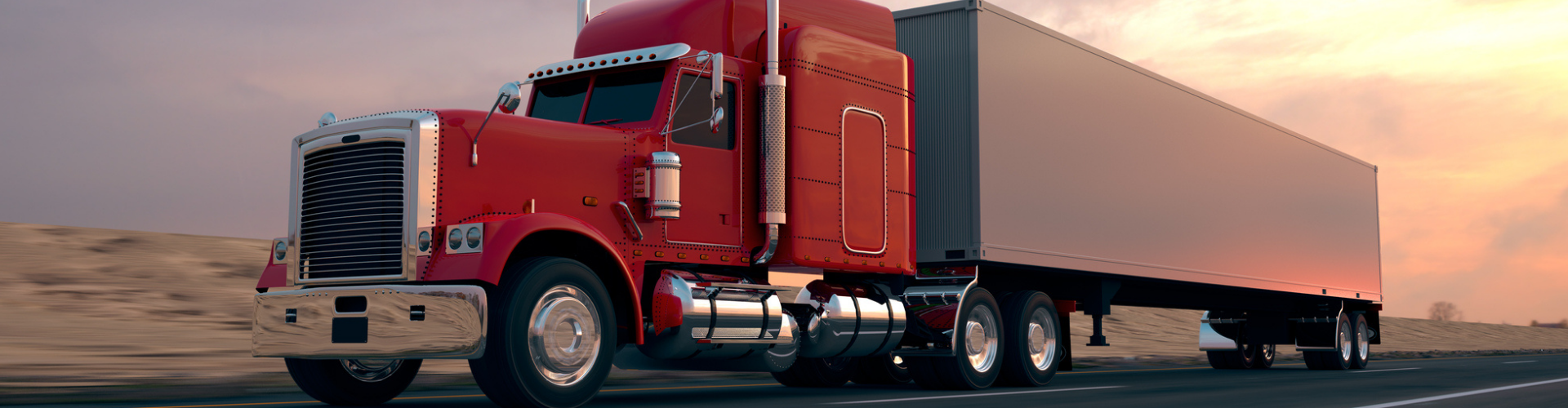
Truck accident litigation involves a narrow and exacting category of catastrophic injury cases in which negligence, regulatory noncompliance, or systemic operational failures by commercial carriers and their drivers result in permanent impairment or death. Collisions involving large commercial vehicles — including semi-tractors, 18-wheelers, tractor-trailers, and heavy freight carriers — often generate harm that transcends ordinary personal injury, requiring disciplined causation analysis and multi-layered liability proof.
Not every collision involving a truck is legally actionable. Truck accident claims rise or fall on whether the evidence can establish a breach of duty — whether individual or institutional — and whether that breach can be shown, through admissible evidence and expert analysis, to have been a substantial factor in producing significant harm. These matters are adjudicated through technical records, regulatory data, expert interpretation, and objective documentation, not conjecture or outcome alone.
Within this domain, Raynes & Lawn operates as an institutional truck accident litigation practice. Matters are evaluated only where the facts, evidence, and legal foundation support accountability under sustained judicial and adversarial scrutiny.
Truck accident claims are governed by a combination of traditional negligence principles and federal and state regulatory frameworks, including statutes and regulations promulgated by the Federal Motor Carrier Safety Administration (FMCSA) and related state authorities. Commercial carriers and drivers owe heightened duties to other road users by virtue of the risks inherent in operating heavy vehicles over public highways.
A viable claim must establish, through admissible evidence:
Judicial evaluation focuses on preventability, foreseeability, regulatory compliance, and whether the technical evidence satisfies required standards of proof.
Causation is central and frequently contested in truck accident litigation. Defendants routinely argue that the incident resulted from unavoidable risk, third-party fault, weather, or other factors not attributable to carrier or driver conduct. Accordingly, the inquiry begins with mechanism.
This analysis commonly requires reconstruction of:
This process requires translation of engineering, regulatory, and medical evidence into litigable fact. Objective documentation must be correlated with how the collision occurred and how the challenged conduct materially contributed to the injuries. Without that integration, even the most devastating outcomes cannot satisfy legal causation standards.
Serious truck accidents often stem from layered failures at the individual and institutional levels. These failures may include:
Effective truck accident litigation requires identifying not only negligent driving, but how regulatory, operational, and supervisory systems contributed to or permitted unsafe practices. Accountability often extends beyond the driver to the corporate entity responsible for safety culture, compliance frameworks, and operational controls.
Truck accident matters are defended vigorously through dispositive motion practice, regulatory compliance disputes, evidentiary challenges, and expert examinations. Courts routinely evaluate:
Matters that proceed to trial are those in which the evidentiary record supports a legally sustainable inference that carrier or driver failures were substantial factors in producing the catastrophic harm claimed. Responsible litigation requires building cases with evidentiary survivability in mind from the outset.
As an institutional truck accident litigation practice, Raynes & Lawn limits representation to matters involving demonstrable, catastrophic harm and legally supportable liability theories. The firm evaluates only a limited number of matters, including those involving:
The firm does not pursue cases involving:
This selectivity reflects the seriousness of the injuries involved and the responsibility inherent in litigating matters of this magnitude.
Truck accident litigation involves contested discovery, expert challenge phases, complex reconstruction evidence, and regulatory analysis. Responsible representation requires readiness for that environment.
Matters advance only after:
Truck accident litigation occupies a distinct position within civil liability law. These cases test the outer limits of causation proof, expert admissibility, and long-term damages modeling. They demand methodological rigor and the willingness to decline matters that cannot be responsibly prosecuted.
Truck accident litigation frequently involves extraordinary technical complexity, extended incident reconstruction, and profound long-term consequences. Such matters demand precision, restraint, and institutional discipline.
Raynes & Lawn routinely evaluates matters referred by other attorneys when the technical, regulatory, or adversarial demands exceed routine litigation capacity.
If the circumstances surrounding a catastrophic truck accident meet the standards outlined above, relevant records may be reviewed to determine whether further evaluation is appropriate. Any review is a threshold assessment only, conducted to determine whether the technical and legal foundations required for responsible litigation are present.
Raynes & Lawn evaluates a limited number of matters involving serious injury, institutional failure, and legally supportable theories of liability. Reviews are conducted to determine whether the medical, technical, and legal foundations required for responsible litigation are present.
Submissions may be made by individuals, families, or referring counsel. Any review is a threshold evaluation only and does not constitute acceptance of representation.
2400 Market Street, Suite 317
Philadelphia, PA 19103
Phone: 1-215-568-6190
Toll-Free: 1-800-535-1797
Fax: 1-215-988-0618
10,000 Lincoln Drive E •
One Greentree Ctr, Ste 201
Marlton, NJ 08053-1536
Phone: 1-856-854-1556
Toll-Free: 1-800-535-1797
Fax: 1-215-988-0618